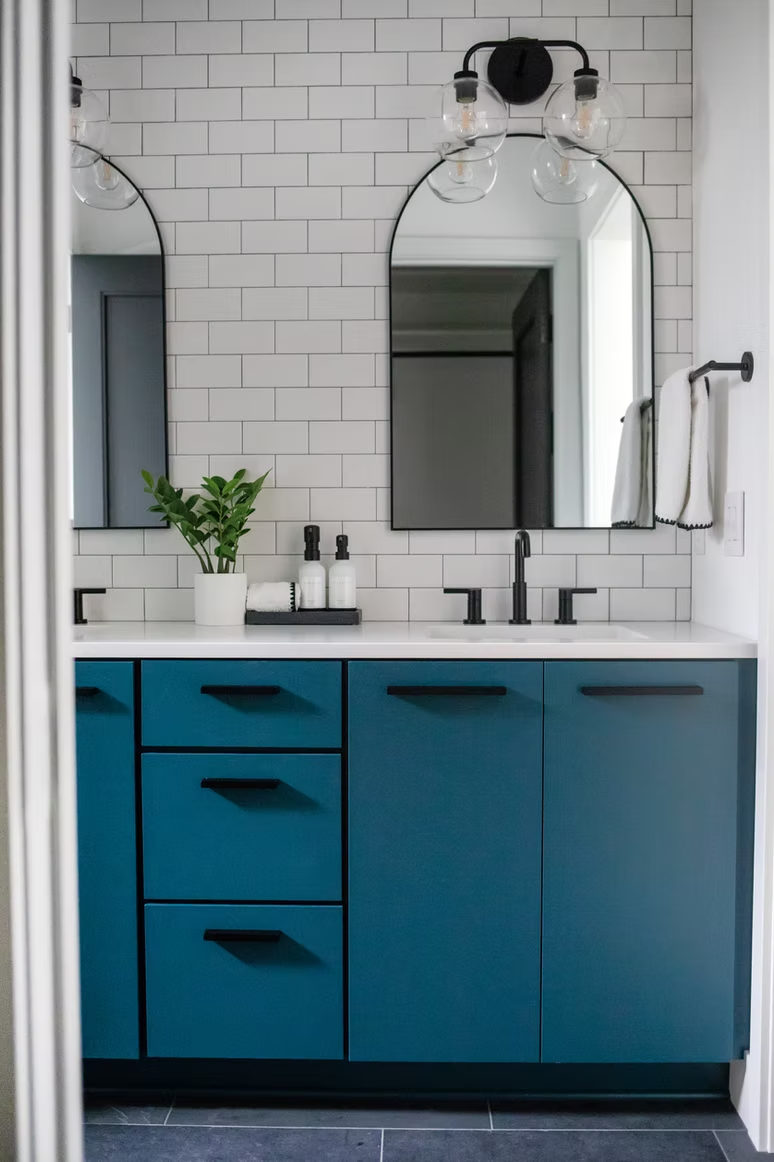
Glass tile is the material people stop and stare at. It bounces light, shows color with a depth you do not get from most other surfaces, and can make a small wall feel like the center of the room. It is also one of the more particular materials to use. Here is where it works beautifully and where something else is the better call.
Kitchen backsplashes. Glass is a natural for the wall behind a stove or sink. It handles splatter and wipes clean in seconds.
Shower walls and niches. A glass accent wall or a glass-lined niche adds sparkle and color to a bathroom without taking up space.
Fireplace surrounds and bars. Smaller areas let glass be the feature without overwhelming a room.
Pools and water features. Glass mosaics made for wet use are a classic choice for pools and spas, and they look especially good in a home near the water. Soft blues and greens that echo the lake are a natural fit for a lake-town home.
Most floors. Glass can be slippery when wet, and it can scratch or chip under foot traffic. Unless a tile is specifically rated for floor use, keep glass on walls.
High-impact areas. A wall where chairs, carts or kids bump regularly may not suit glass, which can chip at the edges.
Large, uninterrupted expanses in a single color. Glass shows every flaw in the wall and in the installation. Large, plain fields can be unforgiving, so mixing in other materials often looks better.
Glass tile is not harder to love than other tile, but it is harder to install well. Keep these points in mind:
Mosaic sheets, which come mounted on mesh, can speed up installation, and they cover more area per hour than setting individual tiles.
You do not have to go all in. Many of our favorite designs pair a band or panel of glass with a matte porcelain or natural stone. The contrast lets the glass sparkle and keeps the budget under control. A glass accent in a shower, or a glass backsplash with simple, warm-toned cabinets, tends to look more intentional than glass everywhere.
Glass changes dramatically under different lighting, so photos are not enough. Stop by the showroom, hold samples up to natural and artificial light, and see which colors work in your home.
Ready to explore glass? Book a free design consultation at our Lake Geneva showroom, 201 Geneva National Avenue South, or call (262) 348-1600. Schedule your free consultation. For more ideas, see our kitchen and bathroom galleries.
Make a free appointment to talk about your project, either in store or with a remote consultation, anytime.