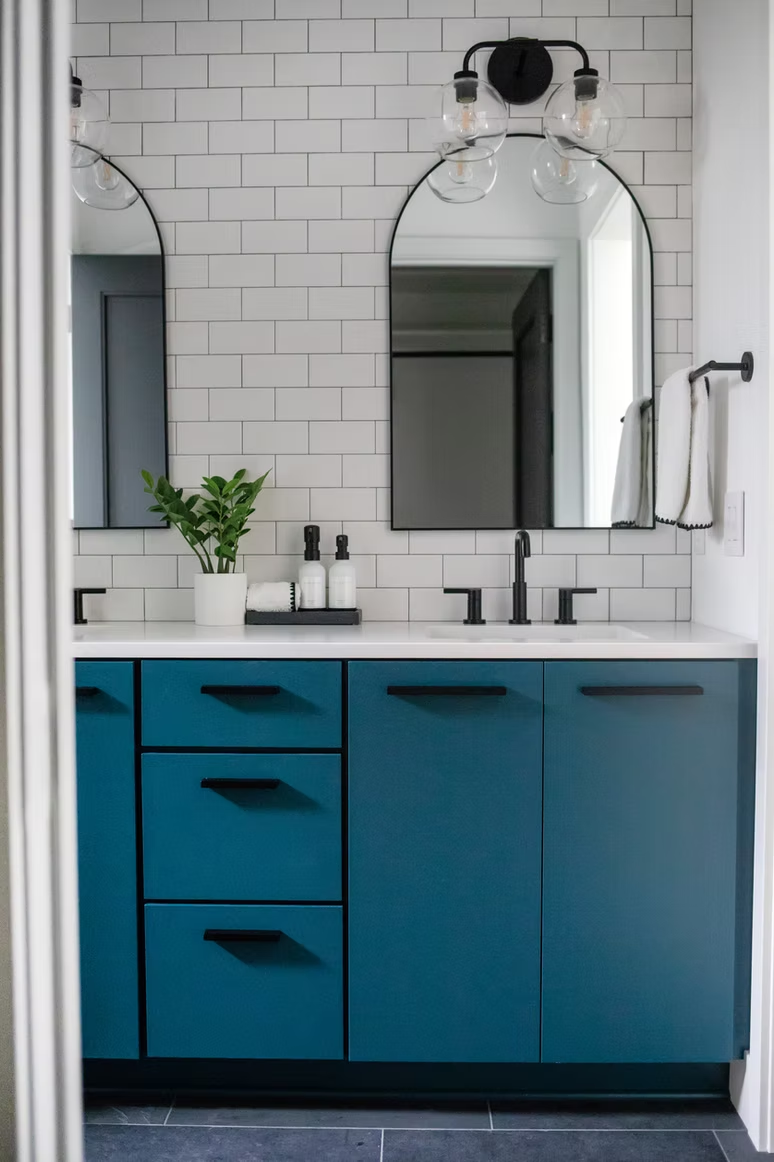
Bathroom floor tile has a harder job than almost any other surface in your home. It gets wet every day, it is stepped on with bare feet, and in Wisconsin it spends months sitting over a cold subfloor. The right tile makes that job easy. The wrong one slips, stains or cracks. Here is what to look for.
Porcelain is the safest default for bathroom floors. It is dense, it absorbs very little water, and it stands up to daily wear. Porcelain comes in nearly every look, including stone, wood, concrete and patterned designs, so you rarely have to give up style for durability.
Ceramic works well on bathroom walls and, if it is rated for floors, in lighter-use bathrooms. Always check that a ceramic tile is floor rated before you buy it.
Natural stone such as marble, travertine and slate is beautiful underfoot, but it needs more care. Most stone should be sealed, and some stones, marble in particular, can etch or stain from common bathroom products. If you love the look of stone, ask us about porcelain that mimics it, or about the stones that handle moisture best.
A polished tile that looks great in a showroom can feel slick when wet. Look for a textured or matte finish, and ask about the tile's slip-resistance rating. The industry measures this with a number called DCOF. A value of 0.42 or higher is the common benchmark for level interior floors that get wet. If a tile has no stated rating, ask.
Tile size changes grip too. Small tile, like a mosaic, has more grout lines, and those lines add traction. That is why mosaics are a popular choice for shower floors.
Winter brings two challenges. The first is cold. Tile feels cold on bare feet, and a bathroom floor over a basement or garage can be especially chilly. Tile is one of the best surfaces for in-floor electric heating, and adding a warming system during a remodel is far easier than adding one later.
The second challenge is what gets tracked in. Salt, sand and slush make their way to bathroom floors from mudrooms and back doors. A mid-tone tile with some texture hides dust and grit better than a pure white or a jet black. A stain-resistant grout, or an epoxy grout, makes cleanup easier.
If your home is a seasonal or lake getaway that sits unheated for part of the year, tell us. Low-absorption porcelain is the better choice where a floor may face freezing temperatures.
A great tile can fail if what is underneath it is wrong. In a bathroom, the subfloor should be flat, stiff and properly prepared. Many installers use an uncoupling or waterproofing membrane under the tile to manage moisture and movement. Ask your installer what they plan to use and why. It is a good question to raise before the project starts.
Larger tile means fewer grout lines and a cleaner look, but it needs a flat floor and does not conform well to slopes. Smaller tile is easier to set around a shower drain. Our guide to tile sizes and layouts covers how to pick between them. For color, light and mid-tones with a bit of variation are the most forgiving for hair, dust and water spots.
The best test for a bathroom floor is to stand on a sample. Bring photos of your bathroom, your vanity and countertop details, and your wall tile ideas, and we will help you pair a floor with the rest of the room.
Ready to choose? Book a free design consultation at our Lake Geneva showroom, 201 Geneva National Avenue South, or call (262) 348-1600. Schedule your free consultation. For more ideas, visit our bathroom inspiration gallery.
Make a free appointment to talk about your project, either in store or with a remote consultation, anytime.